
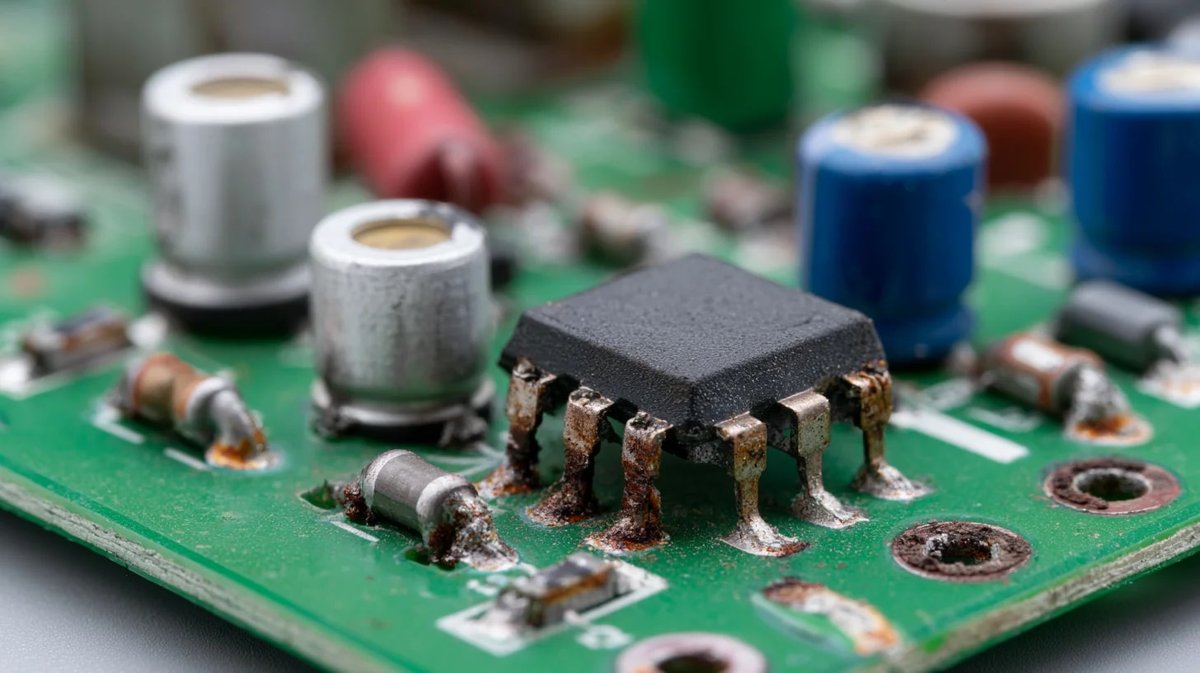
One of the most common problems in LED lighting systems is LED driver failure. Moisture and condensation accumulate unnoticed on circuit boards, causing both loss of conductivity and the risk of short circuits. Technical examiners often look for the source of the failure in moisture combined with thermal cycles. This becomes especially evident in industrial or outdoor applications where moisture damage to electronics is common. Readers want to investigate exactly where the malfunction begins and how it can be prevented. In this article, the causes of LED driver failure, the effects of moisture in terms of circuit board durability, and the precautions that can be taken will be discussed within a technical framework.
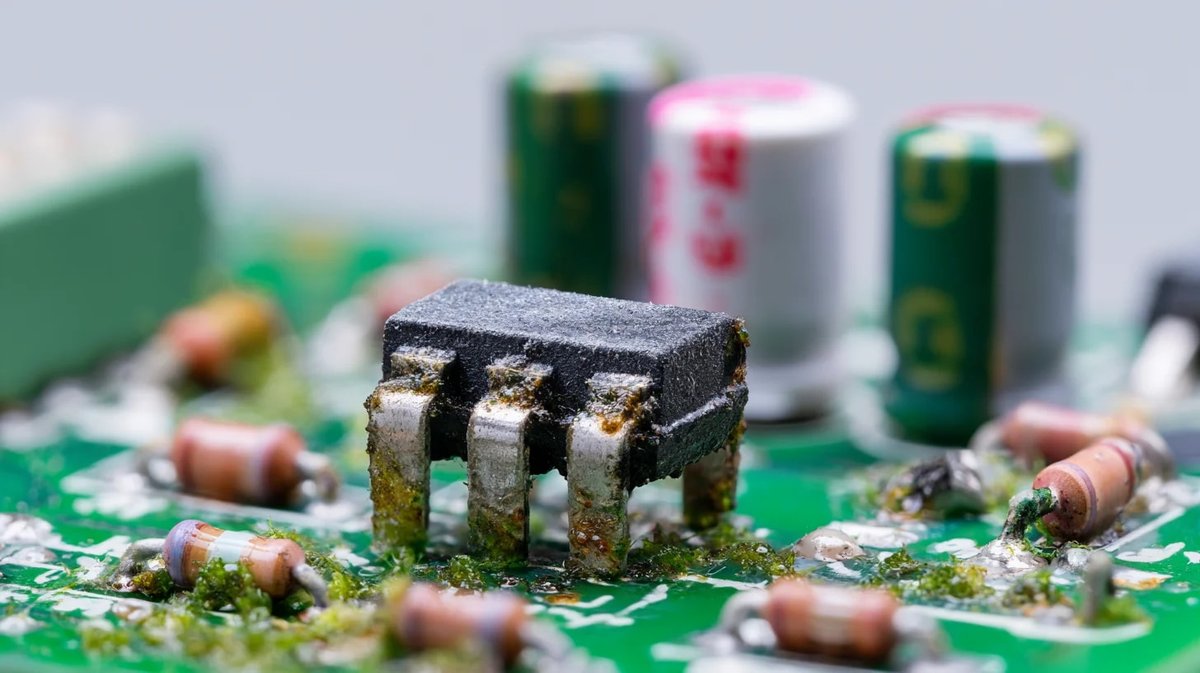
Topic coverage and key points
LED drivers are compact electronic units that convert AC mains voltage into the constant current required for LED arrays. Components such as MOSFET, capacitor, inductor and control ICs are located on a narrow PCB. The weakest point of this structure is the small gaps and solder joints through which moisture can enter.
The relationship between humidity and conductivity loss arises from water molecules forming an oxide layer on metal surfaces. As the oxide layer increases, the contact resistance increases; This reduces the efficiency of the drive and increases heat production. Electronic damage in a humid environment usually progresses slowly, manifesting itself with a decrease in performance in the first stage, followed by sudden failure. The saying "From one drop to another, a lake becomes a lake" is fully valid here.
Thermal stress effect accelerates the moisture problem. The LED driver gets hot when it is running and cools when it is turned off. Cracks formed on the PCB during this cycle make it easier for moisture to leak into the lower layers. As a result, the life of electrolytic capacitors is shortened and corrosion begins in the coil windings. The risk of short circuit increases significantly, especially in environments where high humidity exceeds 70%.
Performance degradation first manifests itself as a decrease in luminous flux, then flashing or complete shutdown. Circuit board durability plays a critical role at this point. Using materials with high TG values or conformal coating applications instead of FR4-based standard cards largely prevents moisture ingress.
When internal environment stabilization is not provided, problems affect the entire system, even if they originate from outside. Balancing environmental conditions with humidity sensor control circuits, automatic ventilation or sealed enclosure designs reduces the frequency of malfunctions in the long term. These measures both reduce maintenance costs and extend system life.
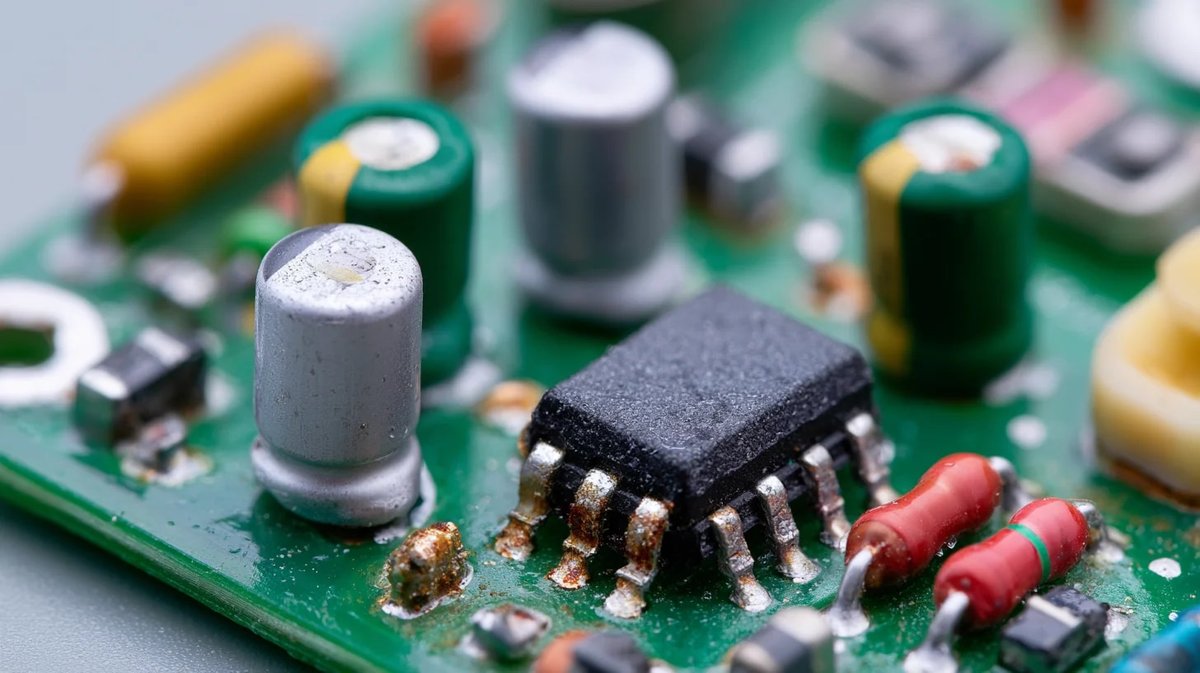
Fault Comparison According to Humidity Levels
The table summarizes how failure time decreases with increasing humidity and what measures should be put in place for circuit board durability. Values are based on general field observations; Each application must be evaluated according to its own environmental conditions.
Frequently Asked Questions
What is the most effective method for moisture protection?The combination of conformal coating and sealed enclosure provides the highest success. If the coating alone is not sufficient, it is useful to add dehumidification packs into the enclosure.
If LED driver failure is caused by moisture, can it be repaired?If detected early, capacitors and solder connections can be renewed. However, if corrosion has reached the lower layers of the PCB, it is safer and more economical to replace the entire board.
Under what environmental conditions are additional precautions necessary?Extra protection should be applied in places with humidity above 65% RH or high temperature differences. This is especially common in food processing facilities, greenhouse lighting and outdoor fixtures.
What are the testing methods?Humidity-cycling testing (85 °C / 85 % RH) and thermal shock tests in an isolated test chamber are used to predict the risk of LED driver failure. In field measurements, surface resistance and leakage current measurements provide sufficient information.
Is fuse sufficient to reduce the risk of short circuit?The fuse provides current protection, but does not prevent moisture-induced leakage currents. For this reason, circuit board durability-increasing coatings should be used together with the fuse.
Next Step
Preventing moisture-related LED driver failure from the beginning is always less costly than dealing with it later. If you would like to evaluate your existing systems in terms of moisture and thermal stress, get a quote to secure your LED systems. Contact: — 📩 sinangokce@idealplastik. com.
Related guides
Continue reading: What is Plastic Injection Molding? Basic Processes and Areas of Use.
Continue reading: Extending the Life of LED Luminaires with Smart Ventilation.