
What are the types of plastic molds? Learn the differences between injection, blow molding, thermoforming molds and hot/cold runner. Read the guide now.
What Does Plastic Mold Mean?
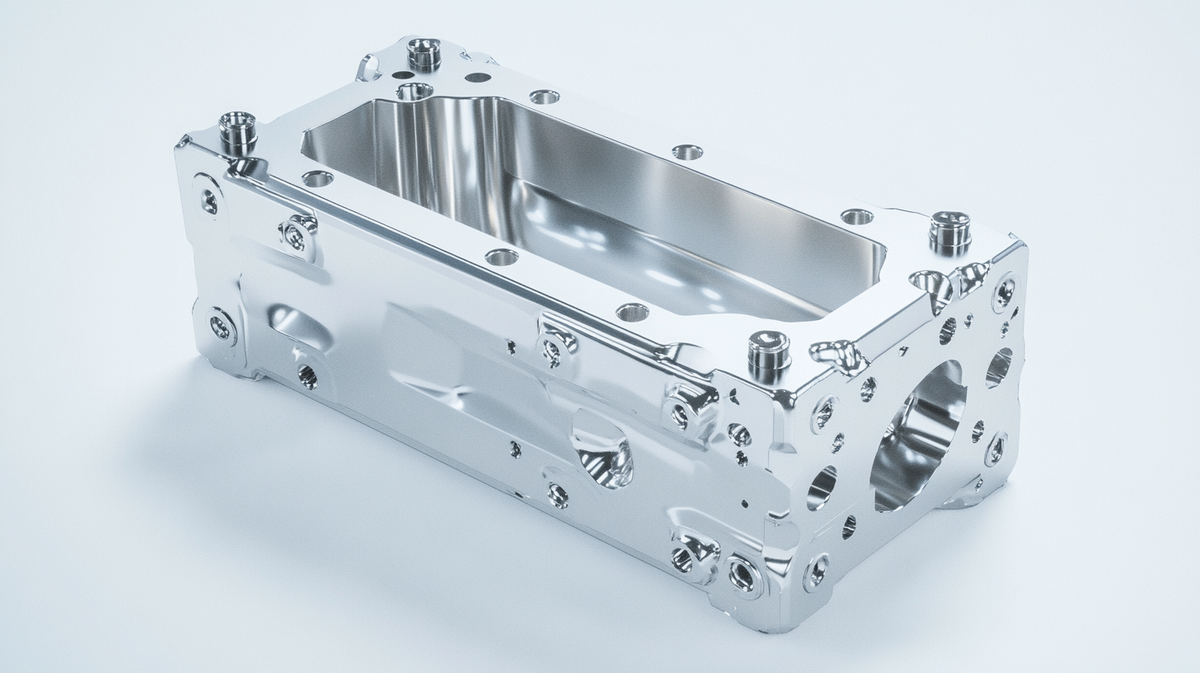
Plastic mold is a production tool that enables molten or heated plastic material to transform into a certain geometry. However, what we call "mold" takes on a completely different structure depending on the process used. For example ainjection mold; While it is a complex set with sub-components such as runner, cooling and propellant system, it is athermoforming moldIt often works as a simpler mold surface that gives the surface form.
So the right question is:“Which mold type is suitable for which production method?”
How Are Plastic Molds Classified?
Plastic mold types are generally classified from 3 main perspectives:
- According to production method(injection, blow molding, thermoforming, etc.)
- According to mold structure(2 plate, 3 plate, unscrewing etc.)
- According to production targets(prototype, mass production, multi-chamber, family, etc.)
From an SEO perspective, “clear separation with tables” helps both the user and the search engine; Especially tables with question-answer intent may come to the fore.İdeal Plastik
Plastic Mold Types According to Production Method
The table below summarizes the most commonly used types of plastic molds according to the process they work with:
| Mold type | Production method used | Typical product examples | When is it preferred? |
| injection mold | plastic injection molding | Covers, clips, housings, technical parts | Precise measurement, high quantity, repeatable quality |
| Blow mold (Blow) | Blow molding (extrusion/injection blow molding) | Bottles, cans, hollow containers | Hollow and lightweight parts, mass production |
| thermoforming mold | Thermoform/vacuum form | Tray, packaging, coating parts | Fast forming from thin sheet |
| Extrusion mold (mold mouth/die) | extrusion | Profile, pipe, wick, strip | Continuous production, long-form product |
| rotation pattern | Rotation (rotomolding) | Warehouse, large volume hollow parts | Large piece, low internal stress, thick wall |
| Compression/transfer mold | Thermoset or some elastomer processes | Electrical insulation parts, some gaskets | Thermoset materials, specific applications |
In the remainder of this article, we will discuss the most sought-after and industry-widely group—injection molds—we will expand on it in more detail. The focus on İdeal Plastik's service pages is positioned as "plastic injection molds and mold production".
Injection Mold Types
1) According to Runner System: Cold Runner and Hot Runner
cold runner moldsThese are systems in which the channels through which the melt flows to the part cool and solidify. Generally the initial investment cost is lower; However, runner waste and additional operations may occur.
hot runner moldsIt ensures that the flow remains warm by heating the runner area in a controlled manner. It has the potential to reduce material waste and improve cycle time; However, system complexity and initial investment cost may increase.
| Criterion | cold runner | hot runner |
| initial investment | lower | higher |
| Fire (sprue) | could be more | may be less |
| Process management | simpler | More technical/tuned |
| suitable scenario | Low-medium quantity, flexible production | High quantity, low wastage target |

2) According to Plate Structure: 2 Plates, 3 Plates
2 plate moldis the most basic injection mold structure. The part separation line is in one plane; The sprue and track are usually separated on the same side. It is sufficient and economical for many standard parts.
3 plate moldIt comes into play especially when door positioning is sensitive. Thanks to the third plate, runner/part separation can be done on a different plane. This makes it easier to optimize track management and feed point on some parts.
3) According to Cavity Layout: Single Eye, Multi Cavity, Family Mold
This classification is the mold equivalent of the question "how many parts do you want to produce in a single cycle?"
| Mold type | What does it produce? | plus | Needs attention |
| Single eye (single cavity) | 1 cycle = 1 piece | Lower mold cost, fast commissioning | Unit cost may increase with higher quantity |
| Multi-cavity | 1 cycle = many pieces of the same part | High capacity, unit cost can decrease | Flow balancing, cooling uniformity critical |
| family mold | 1 cycle = different parts | Can be efficient for assembly sets | It may become difficult to manage the filling/cooling balance between parts |
4) Injection Molds with Special Mechanism
Some parts do not come out with the “standard open-close-push” logic. This is where molds with special mechanisms come into play:
- Insert (metal piece) mold:A metal insert is placed inside the part, and plastic is shaped around it.
- Unscrewing mold:For gear/screw geometries, the part is removed from the mold by “turning” it in a controlled manner.
- Slider/Lifter (side movement) mold:Sliding mechanisms are used for side subsections and locking.
Which Plastic Mold Type Is Suitable For You? (Short Selection Logic)
If we summarize the pattern selection in one sentence:The mold is the tool of the production goal, not the part.
Basic questions that speed up decision making:
- Is the piece hollow or solid? (blow vs injection distinction)
- What is the target quantity and cycle expectation? (number of cavities, hot/cold runner)
- How critical are tolerance and surface expectation? (mold precision, workmanship)
- What is the material type? (flow, shrinkage, temperature requirements)
Common Mistakes
1) Starting with the goal of “cheapest mold”:Seems attractive in the short term; However, maintenance, downtime and wastage costs may increase the total cost.
2) Requiring unnecessarily narrow tolerances:Not every surface has to be “sensitive”; critical regions should be selected.
3) Thinking about the runner/door location as an afterthought:Aesthetic and functional effects penetrate into the core of the mold; It can be expensive to fix later.
Frequently Asked Questions
What are the types of plastic molds?
The most common are injection molds; In addition, blow molding, thermoforming, extrusion and rotation molds are also frequently used in plastic production.
Which is better, hot runner or cold runner in injection mold?
It would be correct to say “more suitable” instead of “better”. Hot runner may be advantageous for high quantity and low wastage targets; Cold runner may start more economically in low-medium quantities.
What does family mold mean?
Family mold is a type of mold used to produce more than one different part in the same mold in a single cycle. It can be preferred in set/component production.
What is the difference between 2 plate mold and 3 plate mold?
2 plates are more basic and economical; 3 plates provide flexibility, especially in door/runner separation and feeding point management.
What is the most important criterion affecting mold selection?
The target production quantity, tolerance/surface expectation and material selection are as decisive as the part geometry; It is difficult to choose the right mold type without this information being clear.İdeal Plastik+1
Conclusion
The subject of "plastic mold types" is actually a subject that should be read through production methods and production targets. Injection molds; It can be adapted to dozens of different scenarios with its runner system, plate structure, cavity layout and mechanisms. Methods such as blow molding, thermoforming and extrusion work with completely different mold logics.
When the correct mold type is selected; cycle time, waste rate, surface quality and production continuity improve simultaneously—which is directly reflected in the total cost.
📩 sinangokce@idealplastik.com.tr📞 +90 212 612 68 40 / 41📍 Istanbul – Türkiye
Suitable for your partmold typeYou can request a short preliminary evaluation to clarify (quantity, material, tolerance targets).
Related guides
Continue reading: What is Plastic Injection Mold? Parts, Types and Working Principle.
Continue reading: 2025 Guide to Choosing the Ideal Injection Mold.