
What is polyamide valve, what are the features of PA6 valve and in which sectors is it used? Discover heat and chemical resistant valve systems.
What is Polyamide Valve?
Polyamide valve is a ventilation element whose body is made of polyamide (PA) material and ensures internal and external pressure balance in closed enclosures. It also helps maintain the IP protection level by preventing the ingress of water, dust and particles.
These products, also called nylon valves or PA6 valves, are preferred especially in industrial applications where high temperature changes are experienced and mechanical strength is required.
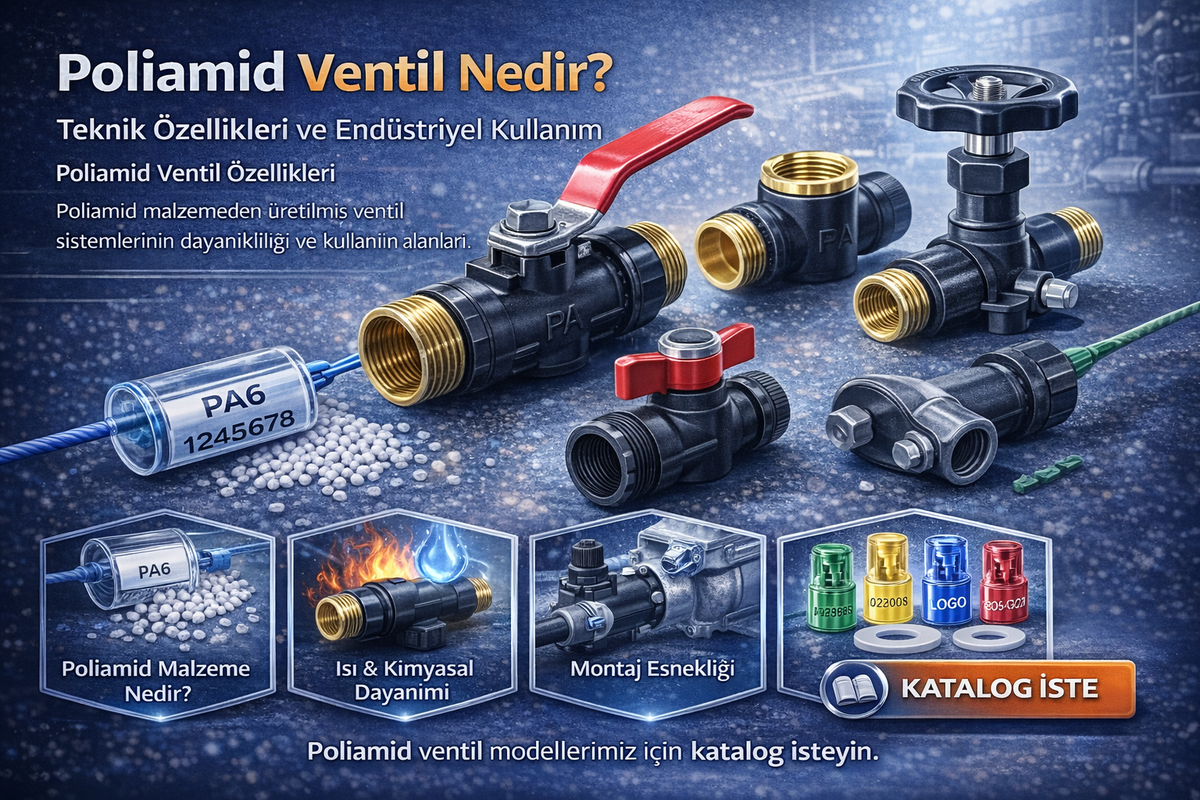
This definition, “what is a polyamide valve?” and “what does a nylon valve do?” Answers calls directly.
What is Polyamide (PA) Material?
Polyamide is a thermoplastic that is among engineering plastics and is known for its high mechanical strength, wear resistance and heat tolerance. One of the most common types is PA6.
The reason why it is preferred in PA6 valve systems is as follows:
- High impact resistance
- High temperature resistance
- chemical resistance
- mechanical stability
- low weight
It is lighter than metal valve bodies and does not corrode. This provides a serious advantage, especially in outdoor applications.
What is the use of Polyamide Valve?
In a closed enclosure, temperature changes occur throughout the day. The air inside expands when it heats up and contracts when it cools. If this pressure difference is not balanced:
- Gaskets are stressed
- Micro cracks form
- Condensation occurs
- Electronic components are damaged
This is where the polyamide valve comes into play. While balancing the internal pressure and external pressure, it prevents the entry of liquid and dust thanks to its special membrane structure.
This system plays a critical role especially in IP66 and IP67 protected enclosures.
Heat Resistant Valve Features
Polyamide valve systems can generally perform between -40°C and +120°C (varies depending on material type).
This wide temperature range is important in the following industries:
- LED lighting fixtures
- Automotive electronic modules
- solar inverter enclosures
- Industrial panel systems
Thanks to its high temperature resistance, the material does not show deformation and the tooth structure does not loosen.
What is its chemical resistance?
Polyamide is resistant to many oils, solvents and chemicals. Because:
- In chemical production facilities
- in agricultural machinery
- In outdoor energy systems
can be used safely.
However, chemical compatibility analysis must be performed in every application. Special formulation may be required in extremely aggressive environments.
Comparison of PA6 Valve and Other Materials
Plastic valve bodies are generally produced from PP, PE or PA material.
PP valve may be more economical, but its high temperature resistance is not as strong as PA. PE offers a more flexible structure but has low mechanical strength.
Polyamide valve stands out in technical applications as it offers both high heat resistance and mechanical stability.
According to metal valve bodies:
- It is lighter
- Does not corrode
- Provides electrical isolation
For this reason, it is preferred in electronic enclosures.
Mounting Flexibility and Standard Connections
Polyamide valve models are generally produced in metric thread sizes. The most common sizes:
M12x1.5M16x1.5M20x1.5
Thanks to these standard connections:
- Fast assembly
- Mass production compatibility is ensured
- Complete sealing is achieved with the casing
IP performance may be reduced if the correct mounting torque is not applied. Therefore the technical installation instructions must be observed.
Industrial Usage Areas
Polyamide valve systems are used in many sectors.
It extends the life of driver cards by ensuring internal humidity balance in LED luminaire production. It provides pressure balance in headlight systems and control modules in the automotive industry. It protects the microclimate inside the enclosure against sudden temperature changes in solar inverter systems.
It is also preferred for the sustainability of the IP protection level in telecommunication cabinets and outdoor electrical panels.
Relationship between IP Protection and Polyamide Valve
IP protection class indicates the product's resistance to water and dust. However, using a completely closed enclosure is not a long-term solution. Increased internal pressure may cause gasket deformation over time.
Polyamide valve prevents water and dust while allowing air passage. In this way, it helps maintain the IP66 or IP67 level.
What should be considered when choosing a polyamide valve?
The following criteria should be taken into account when making the selection:
- operating temperature
- Pressure balancing capacity
- IP protection requirement
- chemical exposure
- Mounting thread size
Choosing the wrong valve may cause condensation problems and warranty costs.
Production Process and Quality Factors
Polyamide valve bodies are generally produced by plastic injection molding. Mold precision determines the accuracy of the tooth form.
Membrane integration directly affects the performance of the product. Air permeability value and water pressure resistance should be tested.
When quality production is not made:
- tooth abduction
- loss of seal
- membrane deformation
Problems such as this may occur.
Polyamide Valve Prices
Price; Varies depending on size, membrane type, IP level and order quantity. Unit cost decreases in high volume production.
Requesting a custom color, logo or custom thread size may affect cost.
Conclusion
Polyamide valve is a reliable pressure balancing solution in industrial applications thanks to its high mechanical strength, heat resistance and chemical stability.
When selected correctly:
- Reduces condensation problem
- Extends electronic component life
- Supports IP protection level
- Reduces maintenance costs
Although it is a small component, it is critical for system security.
Request a catalog about our polyamide valve models, technical dimensions and special production options. Contact our technical team for PA6 valve solutions suitable for your project.
📩 sinangokce@idealplastik.com.tr
📞 +90 212 612 68 40 / 41
📍 Istanbul – Türkiye
Related guides
Continue reading: What is Plastic Injection Molding? Basic Processes and Areas of Use.
Continue reading: Extending the Life of LED Luminaires with Smart Ventilation.