
What are tie rod ends and tie rod seats, how do they work and what malfunctions do they cause? Learn their functions in the steering and suspension system in detail.
What are Tie Rod Ends and Tie Rod Seats?
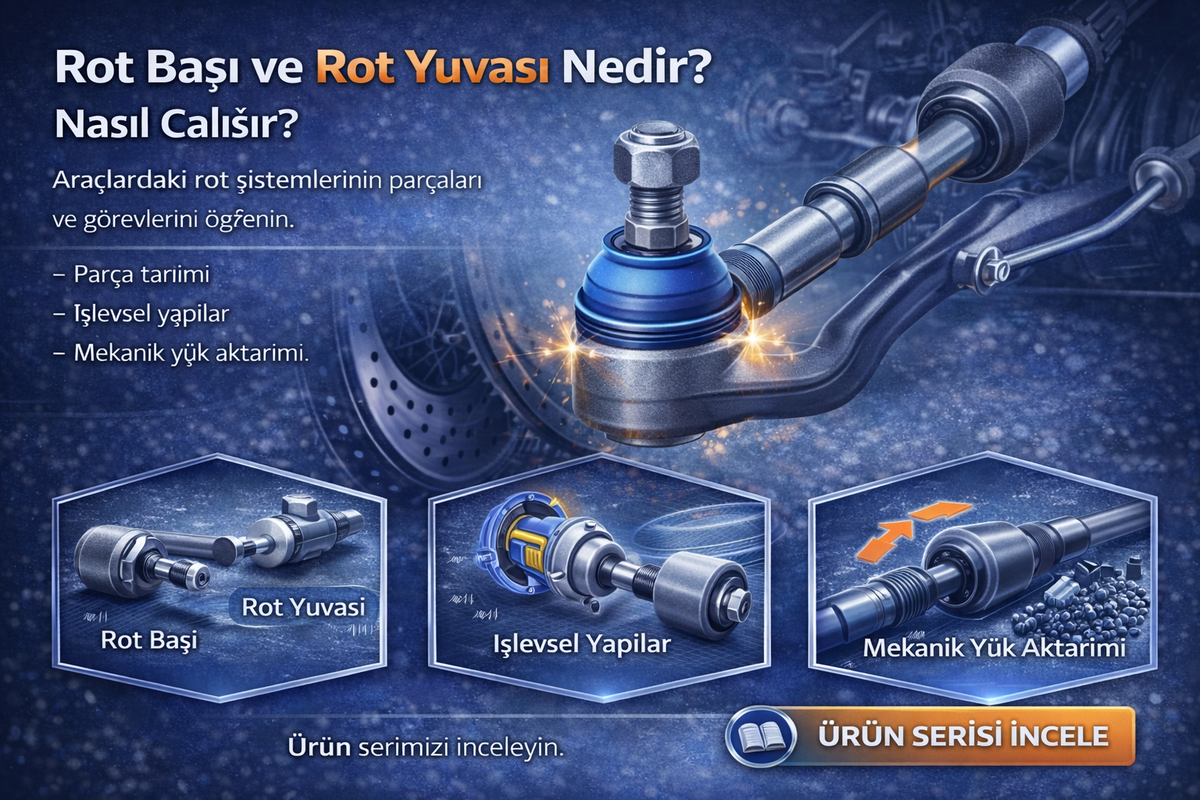
The tie rod end is a connecting element with a movable joint structure that enables the steering of the wheels in the steering system. The tie rod seat is the body part in which this joint operates and carries load.
These two parts work together to transmit the steering movement to the wheels. This mechanism, which works integrated with the suspension system, is of critical importance for both steering and roadholding safety.
“What is a tie rod end?” and “what is the use of the rod housing?” This is exactly the technical answer to their search: An articulated connection system that transfers the steering movement to the wheel in a controlled and safe manner.
How Does the Rod System Work?
When the steering wheel is turned, this movement is transmitted to the steering box. The steering box transfers the movement to the tie rod end via the tie rod shaft. The tie rod end allows both rotation and angle changes thanks to its articulated structure.
Thanks to this structure:
- Wheels turn right and left
- Adapts to suspension movement
- Reacts to changes in the road surface
The tie rod housing is the bearing and protection section that ensures the proper functioning of this joint. The ball joint inside carries both axial and radial loads.
Which System Does the Tie Rod End Belong to?
The tie rod ends are associated with both the steering and suspension systems.
It is part of the steering system because it provides wheel steering. It is part of the suspension system because it offers angular flexibility during shock absorber and swing movements.
Therefore, the tie rod end is a critical component located at the intersection of the two systems.
Structure of Tie Rod End and Rod Seat
The tie rod end generally consists of these basic components:
Steel ball joint, metal body, threaded connection section and protective dust bellows.
The tie rod housing is the metal or reinforced body part where the joint operates. Load transfer takes place here.
Ball joint structure provides multi-axis movement. In this way, the system does not lock when the vehicle turns and the suspension moves.
How Does Mechanical Load Transfer Happen?
While the vehicle is in motion, the tie rod end carries the following loads:
- steering force
- road bumps
- side forces
- Load transfer during braking
The tie rod seat absorbs these forces and transmits them to the chassis. Therefore, material strength is extremely important.
Insufficient strength can lead to loosening and void formation. This causes steering sensitivity to decrease.
How to Identify Tie Rod End Failure?
Searching for “tie rod end failure symptoms” is quite common.
A broken tie rod end may show these symptoms:
Feeling of slack in the steering wheel, rattling sound on rough roads, uneven tire wear and the vehicle pulling left and right.
When the wear on the rod seat increases, joint clearance occurs. This seriously affects driving safety.
If not diagnosed early, it can cause chain damage to the tire and suspension system.

Why Does Tie Rod End Deteriorate?
The tie rod end is a part that works under constant movement and load.
Causes of deterioration include:
Road conditions, impact of potholes and impacts, dirt ingress due to rupture of the dust bellows, loss of lubrication and material fatigue.
When the protective bellows are damaged, dirt and water enter the inner joint. This accelerates wear.
Why is Tie Rod End Replacement Important?
Driving with a faulty tie rod end poses a serious safety risk.
Steering sensitivity decreases and loss of control may occur in sudden maneuvers.
Additionally, the front alignment is disrupted and the tires wear unevenly. This means additional cost.
After the tie rod end replacement, tie rod adjustment must be made.
Difference Between Tie Rod End and Tie Rod
This is one of the questions users frequently ask.
The tie rod is the rod that carries the movement from the steering box. The tie rod end is the articulated connection element located at the end of this arm.
So the tie rod end is the end component of the tie rod.
Materials Used in Rod Systems in Automotive
Tie rod ends are generally made of high-strength steel. The ball joint has a hardened surface.
In some applications, friction is reduced by using plastic or polymer bearing elements.
Surface coating and heat treatment are applied for high strength and long life.
Tie Rod End and Safety Relationship
The tie rod system is directly related to driving safety.
Defective tie rod end:
- Reduces steering control
- Can affect braking distance
- Reduces tire performance
Therefore, regular control and periodic maintenance are important.
Quality Criteria at Tie Rod End
The following features are required in a quality tie rod end:
High joint strength, precise tooth tolerance, durable bellows structure and long-lasting lubrication system.
Automotive manufacturers impose high quality standards for these parts.
Conclusion
Tie rod end and tie rod housing are one of the most critical fasteners of the steering and suspension system. It ensures that the steering movement is transmitted safely to the wheel.
Although it may seem like a small component, it has a direct impact on driving safety.
Long-lasting and safe use is possible with the right materials, quality production and regular maintenance.
Check out our product range to get detailed information about our tie rod system components and technical solutions. Contact us for automotive part solutions specific to your projects.
📩 sinangokce@idealplastik.com.tr
📞 +90 212 612 68 40 / 41
📍 Istanbul – Türkiye
Related guides
Continue reading: What is Plastic Injection Molding? Basic Processes and Areas of Use.
Continue reading: contract injection molding with İdeal Plastik: High Quality and Affordable Price.