
Plastic gaskets are used in various industries as flat washers or injection gaskets. Discover production techniques and usage areas. Check out our catalogue.
Emerging industrial needs as well as traditional metal or rubber sealsplastic gasketsbrought to the fore. Thanks to its lightness, flexibility and cost advantage, it can be used in many areasplastic based gasketsis preferred.
In this article, “What is a plastic gasket, for what purpose is it used and how is it produced?We will answer your questions and also discuss in detail what it is useful for in which sectors.
What is a Plastic Gasket?
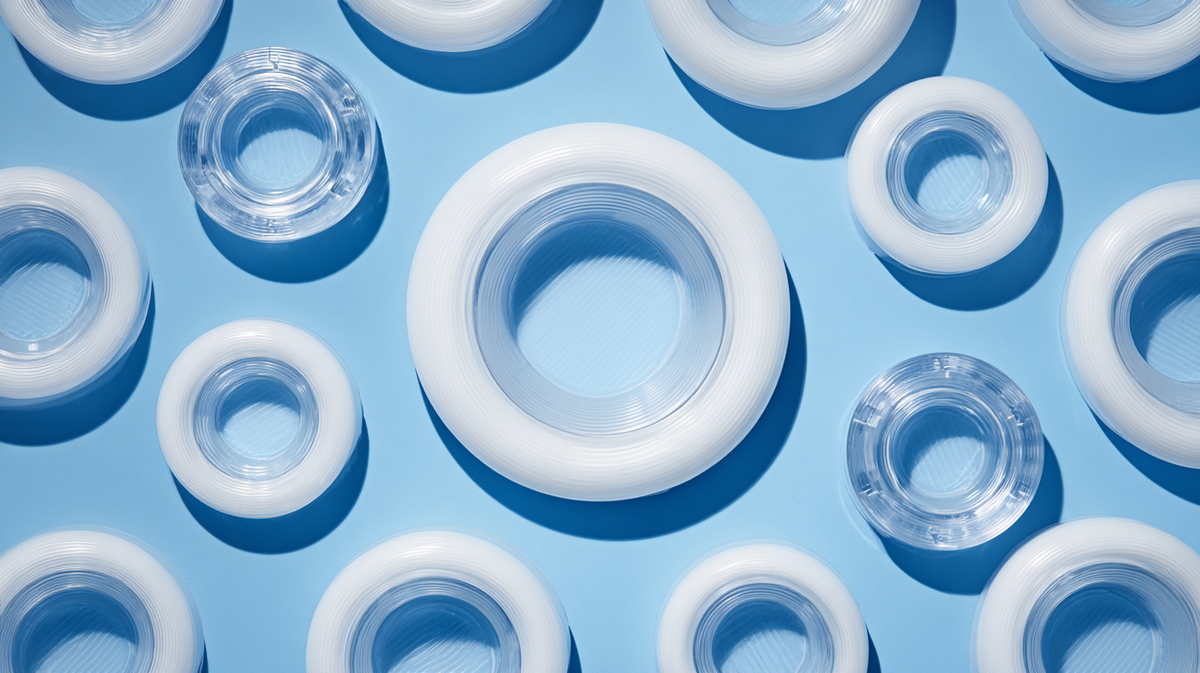
plastic gasketIt is a part that is generally produced from polymer-based materials and performs the functions of sealing, impact absorption or surface protection between two surfaces.
It can be produced in the following types depending on the purpose of use:
- flat plastic stamp: Surface protector or gap compensator in flange, bolt and similar connections.
- injection gasket: Gasket products with complex geometry, shaped with special molds.
- sealing plastic: Parts that perform a sealing function, usually with elastomer additives.
Technical Tasks of Plastic Gaskets
- sealing: It is used to prevent the passage of fluids. It is especially effective in low/medium pressure systems.
- Fill in the Blank: Compensates for micro-openings that occur during assembly.
- Vibration Damping: Reduces mechanical vibrations in machines.
- Surface Protection: Prevents wear on metal surfaces and protects the paint layer.
- Insulation: Provides electrical insulation (for example, in panel gaskets).
What Materials Is It Made From?
The following materials are generally preferred in plastic gasket production:
| Material | Features | APPLICATION |
| PE (Polyethylene) | Lightweight, chemical resistant | Water systems, fittings |
| PP (Polypropylene) | Resistant to heat and solvents | laboratory systems |
| PA (Polyamide – Nylon) | High mechanical strength | automotive parts |
| PTFE (Teflon) | High temperature and chemical resistance | Chemistry and medical applications |
| PVC | Economical, environmentally protected | electrical boxes, panels |

In Which Sectors Are Plastic Gaskets Used?
Automotive
- Engine ports
- Water and air connections
- Electronic module assemblies
Electrical-Electronics
- Insulation at cable transition points
- IP protection element in panels
- LED luminaire gaskets
Water & Plumbing Systems
- Leak-proof ports
- Gaskets under valves, faucets and armatures
White goods
- Interior door seals
- sensor slots
- Plastic parts transition seals
Medical and Food
- Food compatible sealing parts
- Sterile connection surfaces
Production Techniques
Plastic gasket production; It is made with different techniques depending on the desired form, precision and production amount:
- Injection Molding:High volume production for gaskets in complex forms.
- Cutting / Pressing:Fast and economical method for flat gaskets.
- Laser / CNC Cutting:For prototype and custom-sized low-volume jobs.
- Extrusion + Cutting:Production in long lines and then slicing method.
Why Should Plastic Gasket Be Preferred?
✅ Lightweight and cost-effective
✅ High chemical and environmental resistance
✅ Recyclable and environmentally friendly
✅ Easily shapeable
✅ Project-specific ease of production
Get Technical Support in Plastic Gasket Selection
As İdeal Plastik, we offer plastic gasket solutions specific to your application. According to your technical drawing, sample or project requirementsinjection molded or cut plastic gasket productionwe do.
📩 sinangokce@idealplastik.com.tr
📞 +90 212 612 68 40 / 41
📍 Istanbul – Türkiye
🗂️ Check out our plastic gasket catalog and contact us for the solution suitable for your application.
Frequently Asked Questions
Is the plastic gasket sufficient for sealing?
It provides high efficiency in medium-low pressure applications with suitable material and form.
Are plastic gaskets heat resistant?
It depends on the material used. For example, PTFE can withstand up to 260°C.
What is the difference between a gasket produced by injection and a cut gasket?
Injection gaskets can have complex geometries; Cut gaskets are in flat form and low cost.
Can plastic gaskets with special forms be produced?
Yes, special production is carried out with technical drawings or samples.
Related guides
Continue reading: What is a Gasket? Types and Areas of Use.
Continue reading: Can Electrical Insulation Be Provided with Plastic Gasket?.